A brief history of breakfast.
From ancient grain porridges to the modern brunch — how the first meal of the day became the world's most personal ritual.
No meal is as universal as breakfast, and none varies as wildly. In Turkey it is a long, social spread of cheese and olives and eggs that takes an hour. In Japan it is rice, soup, and quiet. In France it is a croissant eaten standing over a kitchen sink. In Morocco it is msemen with argan oil, soft and warm and made by hand. What unites all of them is the moment: early, still, before the world asks anything of you. That moment has a history as old as the species. This is a short version of it.
Grain and fire.
The first breakfasts weren't eaten at tables. They were eaten crouching near hearths, holding flatbreads made from the wild grasses early farmers had only just begun to cultivate. Archaeologists have found evidence of grain-based porridges in Neolithic settlements across the Fertile Crescent — a slow-cooked mixture of emmer wheat and water, eaten at first light before the work of the day began. It was sustenance, not ceremony. But it was also the beginning of a pattern: something warm, something simple, something eaten in the morning to prepare the body for effort.
In Ancient Egypt, workers who built the pyramids ate bread, onions, and beer for breakfast — a combination that strikes us as strange but made complete nutritional sense. The beer was thick, barely fermented, closer to porridge water than what we would recognise. Bread was often made from spelt, a grain that would feed the Mediterranean world for thousands of years. The Romans called their morning meal ientaculum: a small portion of bread dipped in olive oil, sometimes paired with cheese, olives, or honey. Eaten standing, often in the street.
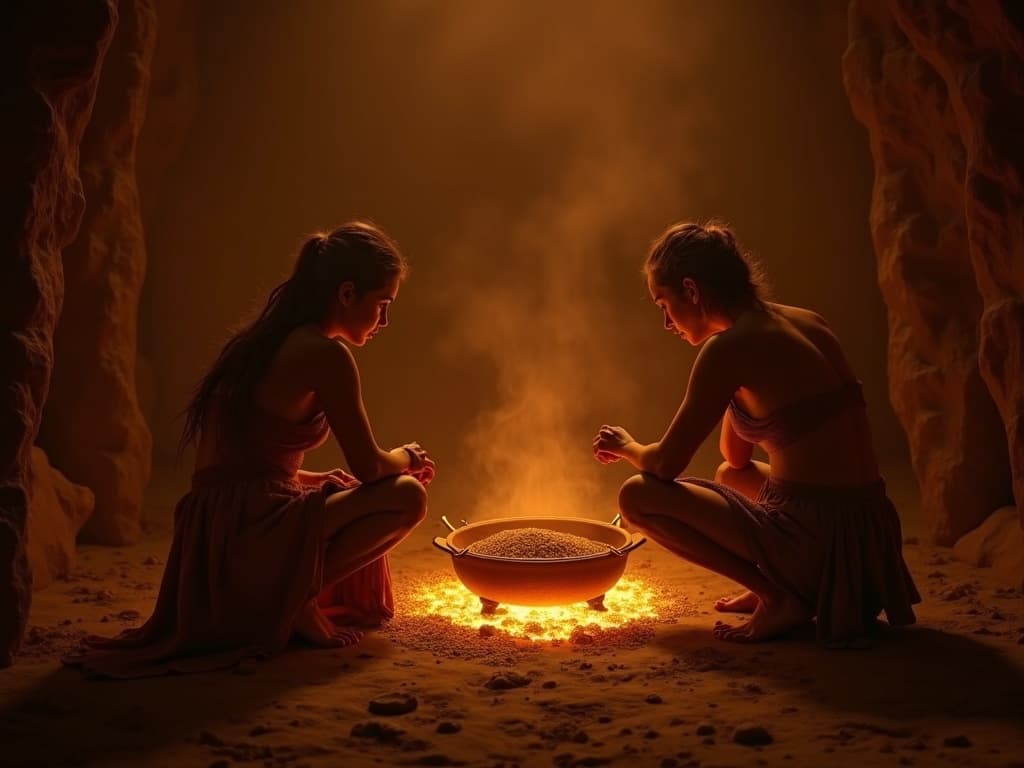
"The Romans had no concept of breakfast as leisure. It was fuel, consumed on the way to work."
The moral meal.
In medieval Europe, breakfast became entangled with moral philosophy. The Church considered eating early in the morning a form of gluttony — a bodily weakness, a sign that one could not wait for the proper midday meal. Fasting until noon was considered virtuous, and only certain people were formally granted permission to eat in the morning: the sick, children, manual labourers, and those who worked before sunrise.
This created a fascinating class divide. The poor — who worked the fields from before dawn — had been eating breakfast for practical necessity for centuries. Pottage (a thick grain or vegetable stew) was the working person's morning meal from England to Eastern Europe, simmered overnight and eaten at first light. Meanwhile, the nobility, who rose later and worked less, were supposed to abstain. In practice, they often didn't.
By the 14th and 15th centuries, as urban centres grew and guild workers began their days before the cathedral bells, the morning meal crept into broader acceptance. Bread, ale, and butter — sometimes a piece of cold meat — became standard across social classes. The moral objection was quietly dropped.
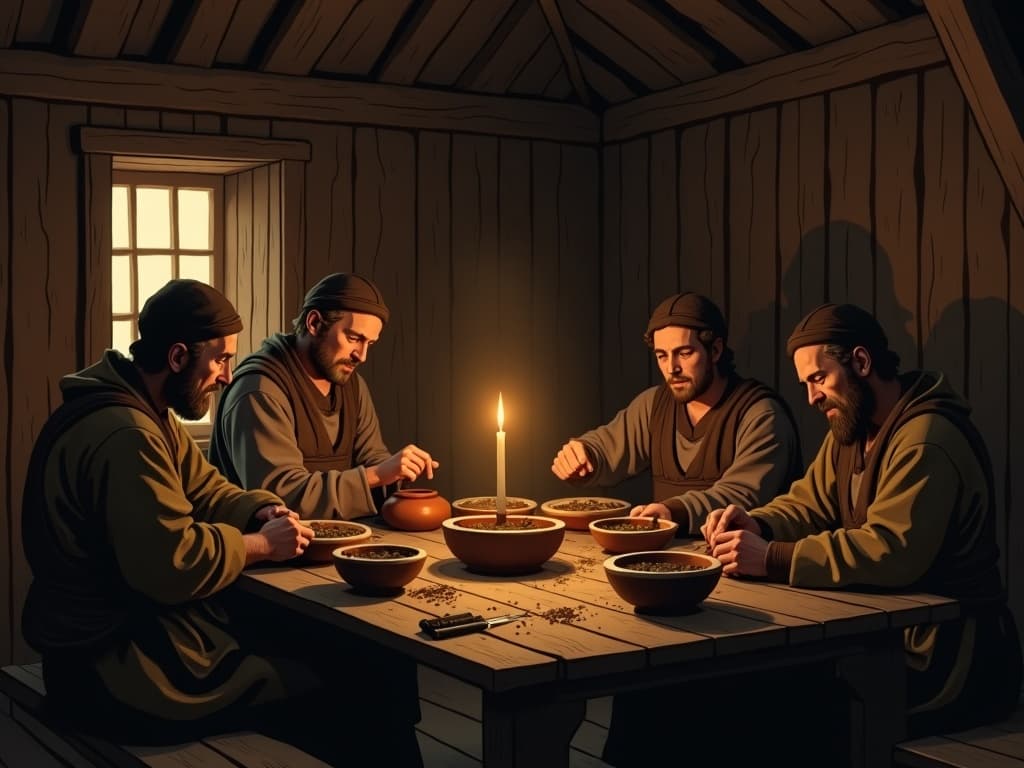
"Pottage — a thick, slow-simmered grain porridge — fed most of Europe through a thousand years of mornings."
New worlds, new ingredients.
The 16th century reshuffled the world's pantries. The Columbian Exchange — the transfer of plants, animals, and foods between the Americas and the Old World — arrived at the breakfast table slowly but permanently.
Tomatoes reached southern Europe by the 1540s and were treated with suspicion for over a century before becoming essential to shakshuka, menemen, and the Neapolitan pantry. Maize arrived in West Africa and became nsima, ugali, and polenta. Potatoes — first domesticated in the Andes — reached Ireland by the 1590s and would define that country's food culture for three centuries.
In the Americas, the story ran in the other direction. Spanish colonisers found cultures that ate chilli, tomato, and squash at dawn — often with corn tortillas or tamales prepared since midnight. The Aztec breakfast was a sophisticated, prepared affair: ground corn, cacao drinks spiced with vanilla and chilli, protein from chia seeds and amaranth. Much of this was discarded or suppressed by colonisers but survived in practice, and forms the backbone of dishes like chilaquiles and huevos rancheros that we associate with Mexican breakfast today.
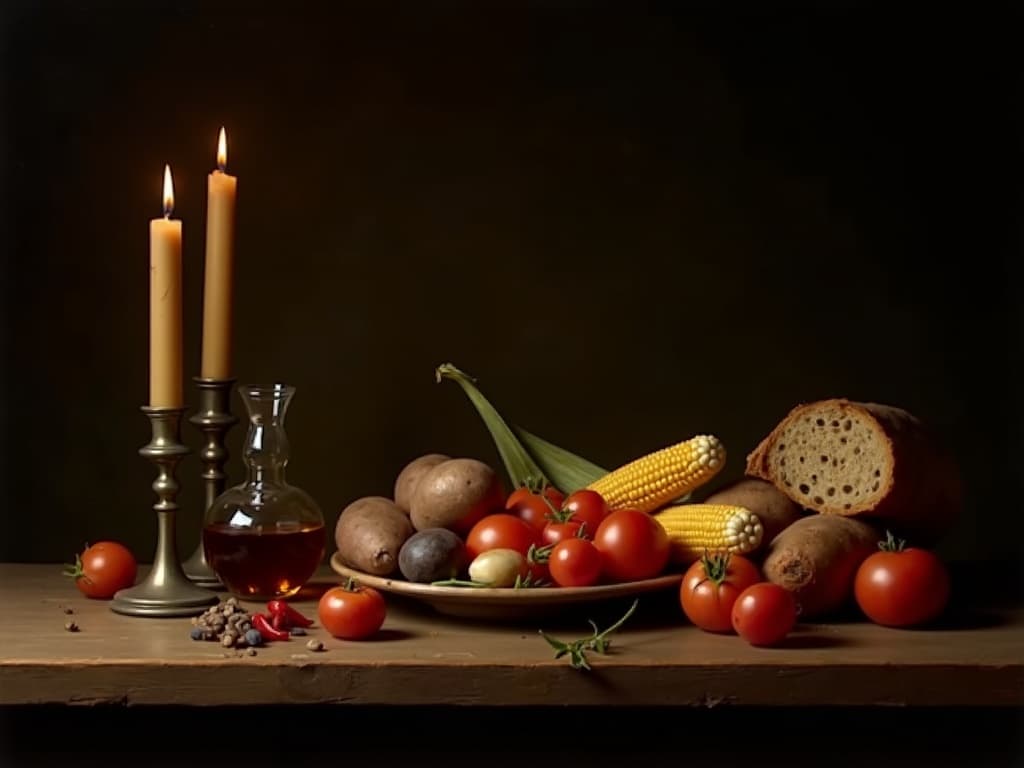
"The potato arrived in Ireland in the 1590s. Within two centuries, it had entirely reorganised the country's morning."
Breakfast becomes modern.
The 19th century industrialised the morning. Factory work demanded that labourers be at their stations before light, which meant breakfast had to be quick, cheap, and filling. In England, the "full English" — bacon, eggs, sausage, toast, beans — began to coalesce in its recognisable form, though for most working families it remained a Sunday luxury. The weekday meal was bread and dripping, oats, or yesterday's leftovers.
In the 1860s and 1870s, a new idea arrived: breakfast as medicine. Dr. James Jackson and John Harvey Kellogg, both motivated by Victorian-era health reform movements, began developing processed cereals as a "clean" alternative to the fatty, meat-heavy breakfasts they believed were causing illness. Granola (originally called "granula") was followed by corn flakes, and the modern cereal industry was born in Battle Creek, Michigan — ironically, in a Seventh-day Adventist sanatorium.
The American breakfast became simultaneously the most elaborate (the full diner breakfast, established by the 1900s, with eggs, pancakes, hash browns, and coffee) and the most processed (cereal with cold milk, a product of the same era). These two traditions have sat in tension ever since.
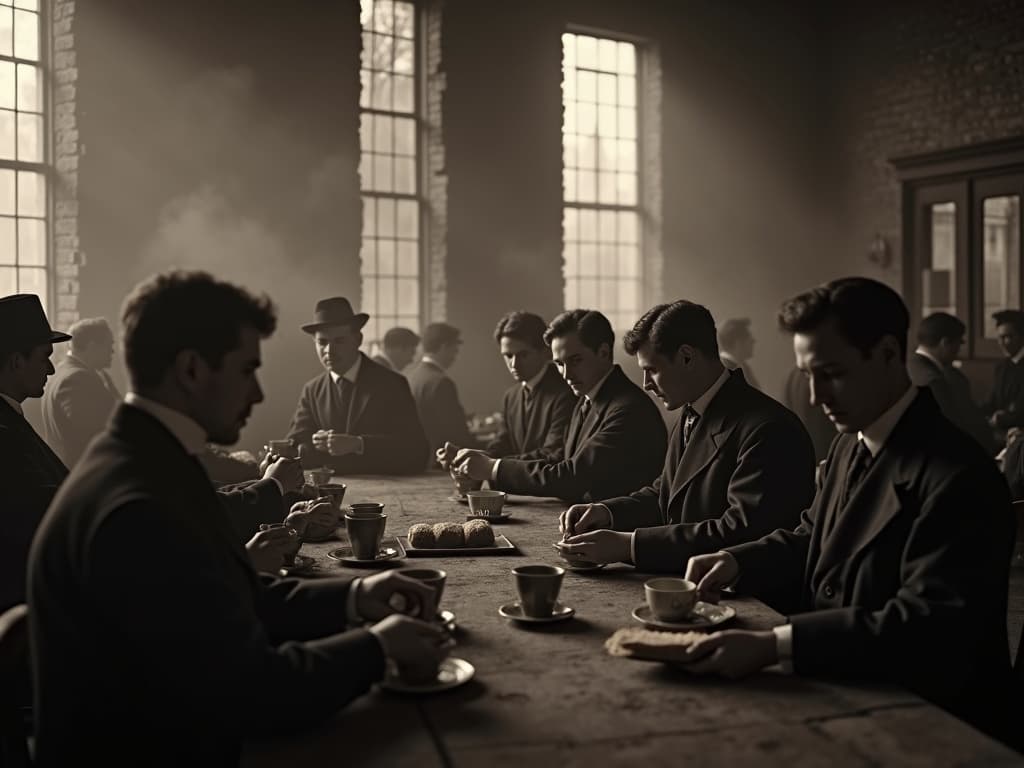
"Corn flakes were invented in a sanatorium. The idea was that bland food would suppress unwholesome impulses."
Brunch, jet travel, and the croissant problem.
The 20th century gave the world brunch, orange juice as a breakfast institution (an invention of the Florida citrus industry in the 1920s), and the slow decoupling of breakfast from time. In post-war America, the diner became the democratised version of the hotel breakfast — eggs any style, coffee bottomless, a space to sit without having to justify it.
In Japan, the breakfast tradition moved in a different direction entirely. The traditional Japanese breakfast — gohan (rice), miso soup, pickles, and a small protein — was never colonised by the Western egg-and-cereal model in the way other cultures were. The Japanese hotel breakfast, which contains both Western and Japanese options side by side, became a cultural symbol of a country that absorbed influence without discarding its own habits.
In France, the croissant debate is ongoing. The croissant is technically a weekday breakfast pastry — a quick, standing affair with coffee. The long, elaborate petit déjeuner belongs to Sundays and hotel lobbies. And yet the croissant has become the global symbol of French breakfast in a way that slightly baffles the French, who are as likely to eat a tartine (bread and butter) or a simple slice of brioche on any given morning.
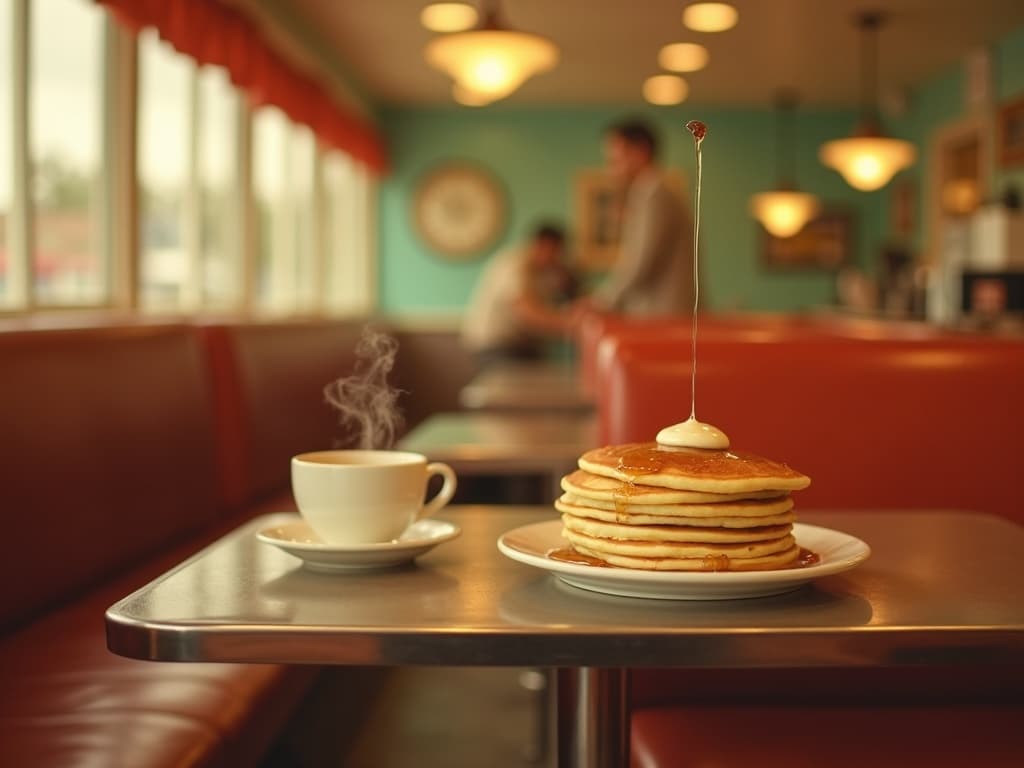
"The full diner breakfast — eggs, pancakes, hash browns, coffee — became available to nearly everyone in America by 1940."
The slow return.
Something interesting is happening with breakfast right now. After decades of the morning meal being treated as an inconvenience — something to skip, to eat in the car, to replace with a protein bar or a smoothie — there's a measurable return to the slow breakfast.
The pandemic, which forced millions of people to stay home during morning hours, appears to have broken something in the relationship between speed and breakfast. People had time. They made sourdough. They started making proper oats. They found that a thirty-minute morning at the table — with a real cup of coffee and food that required actual attention — changed the mood of the rest of the day in a way that nothing else quite replicated.
This isn't a passing trend. The breakfast that began as grain and fire — practical, warming, grounding — has come full circle. We are, in the end, still the animals who need something warm and slow in the morning. We just had to be reminded.
"The pandemic gave people back their mornings. Many of them discovered they hadn't been using them at all."
Start cooking
History is fine. Breakfast is better.
Forty-four recipes from fourteen countries. All tested on real mornings. All made for real kitchens.
Browse all recipes →